
Daniel Canogar (Madrid, 1964) is one of the most prominent contemporary visual artists both nationally and internationally. At LABoral Centro de Arte y Creación Industrial, he presents Iconoclast, an installation that delves into one of the central issues of contemporary digital culture: the relationship between image, technology, and power. Since ancient times, the portrait genre has been understood as a vehicle for constructing idols or icons, triggering major social conflicts surrounding the control of such representations—from 9th-century Byzantine iconoclasm to today’s celebrity culture. The vast reach enabled by digital media has further shaped how idols are built within these spaces.
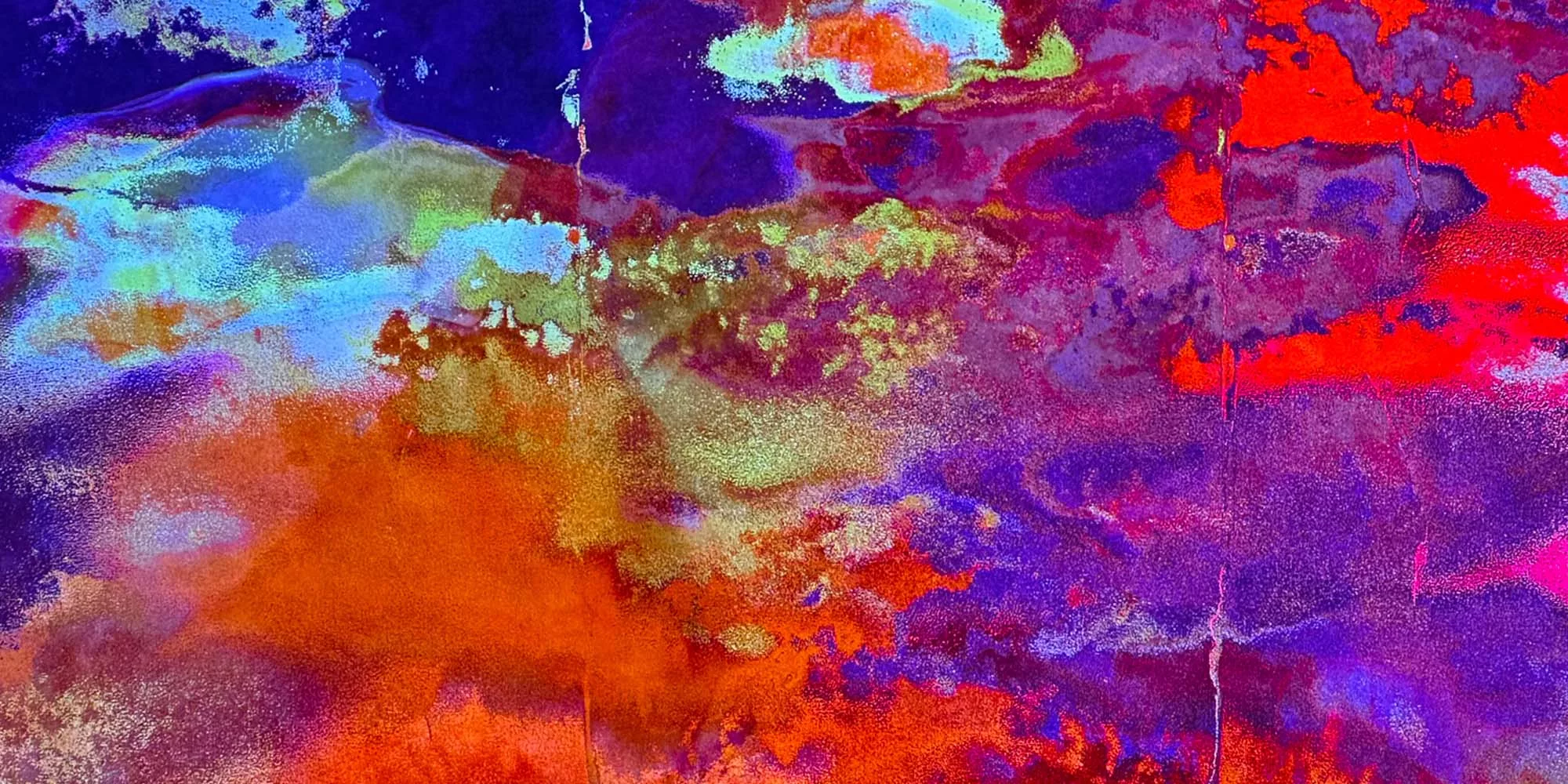
Iconoclast is a generative artwork that transforms the faces of figures holding great power and influence in 2026. Selected through artificial intelligence tools, these images are extracted from videos found online and transformed using a custom-built algorithm. Drawing inspiration from diverse sources—including the paintings of Francis Bacon and Oscar Wilde’s The Picture of Dorian Gray—the work reflects on the historical relationship between art, portraiture, and power.
Iconoclast also references Daniel Canogar’s early darkroom photographic experiments. The piece evokes the strained surfaces of prints overexposed to photographic chemicals, which produced cracked textures, bubbling effects, and the peeling of photosensitive emulsion. In Iconoclast, the custom algorithm dissolves the depth of the videos, turning the faces of the rich and powerful into haunting, painterly gestures of surface material.
Iconoclast directly confronts the mechanisms that sustain contemporary systems of representing power, highlighting the central role of the image as a legitimizing device in current culture. LABoral Centro de Arte y Creación Industrial hosts this installation, which aligns with an interest in exploring how emerging technologies transform our perception of the world, systems of representation, and the structures that organize society. The work thus creates a space for reflection on the role of artificial intelligence in constructing new imaginaries, as well as the forms of control, influence, and vulnerability that accompany images in the digital age.