Between Species: Ways of Being Together forms part of the first edition of the Puerto de El Musel – LABoral Artistic Production Grant, an initiative jointly promoted by LABoral Centre for Art and Industrial Creation and the Port Authority of Gijón, a member of the Board of Trustees of the LABoral Foundation. The grant was established with the aim of promoting research and artistic production projects that engage in dialogue with the Port of El Musel and the marine environment from artistic, technological, ecological or social perspectives, reinforcing both institutions’ shared commitment to contemporary creation and reflection on port territories as spaces for transformation, exchange and innovation.
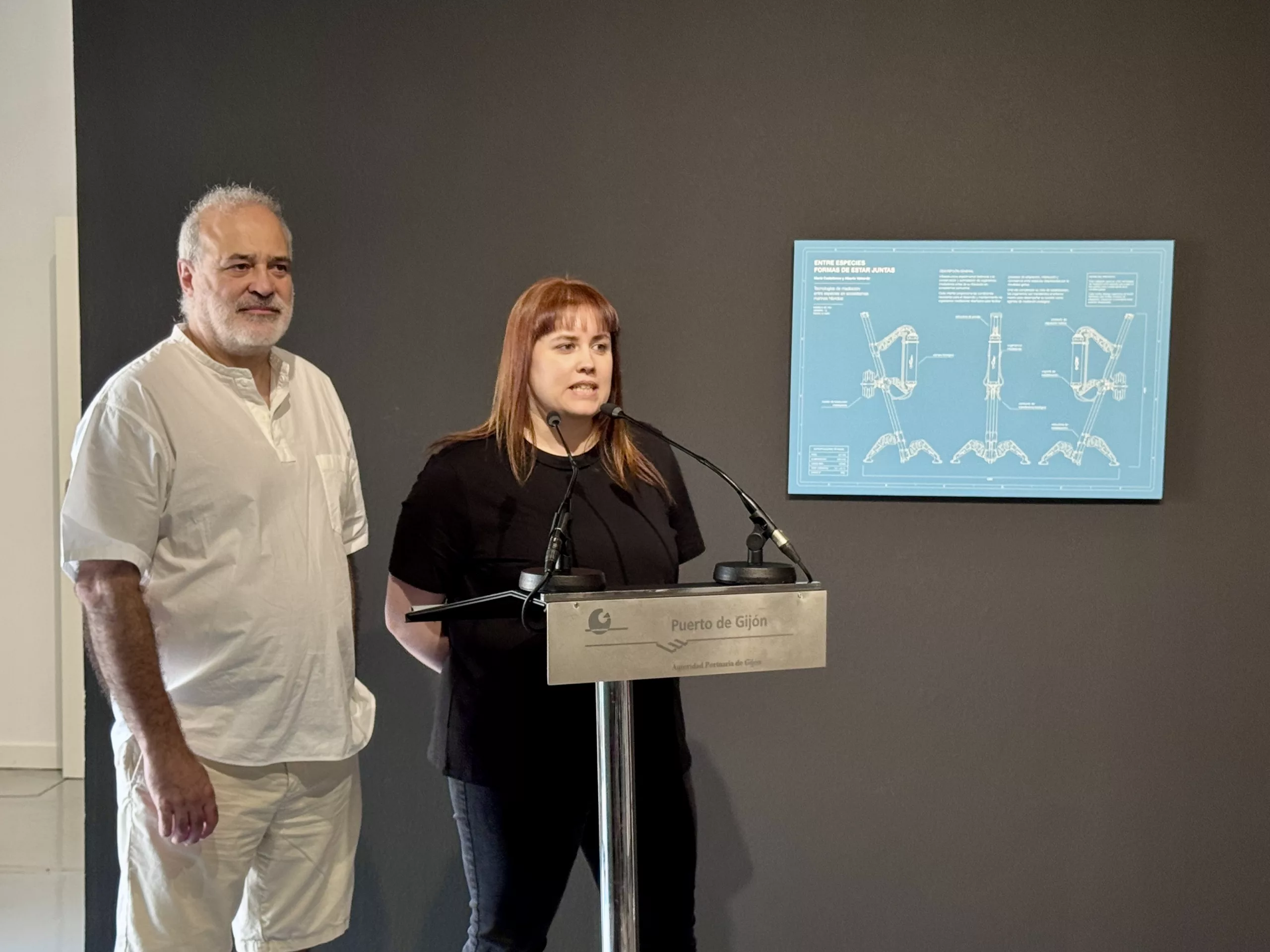
The project by María Castellanos and Alberto Valverde, which opens on 23 July at 7.00 pm in the Sala de la Antigua Rula, creates a speculative fiction to imagine technologies for interspecies mediation in today’s ports. These infrastructures concentrate material, economic and biological flows where, in addition to the constant transit of goods and people, the unintentional transfer of organisms to distant ecosystems is facilitated.
This artistic research analyses not only the organisms themselves but also the infrastructures that facilitate their transfer, in order to answer the question: how does a species become invasive? In ports, transport systems intervene in the circulation of species and alter the links within
This artistic research analyses not only organisms, but also the infrastructure that facilitates their movement, in order to answer the question: how does a species become invasive? In ports, transport systems play a part in the movement of species and alter the links between ecosystems that had been isolated for millennia. The installation questions whether what we call an invasive species is, in reality, the result of our own models of mobility.
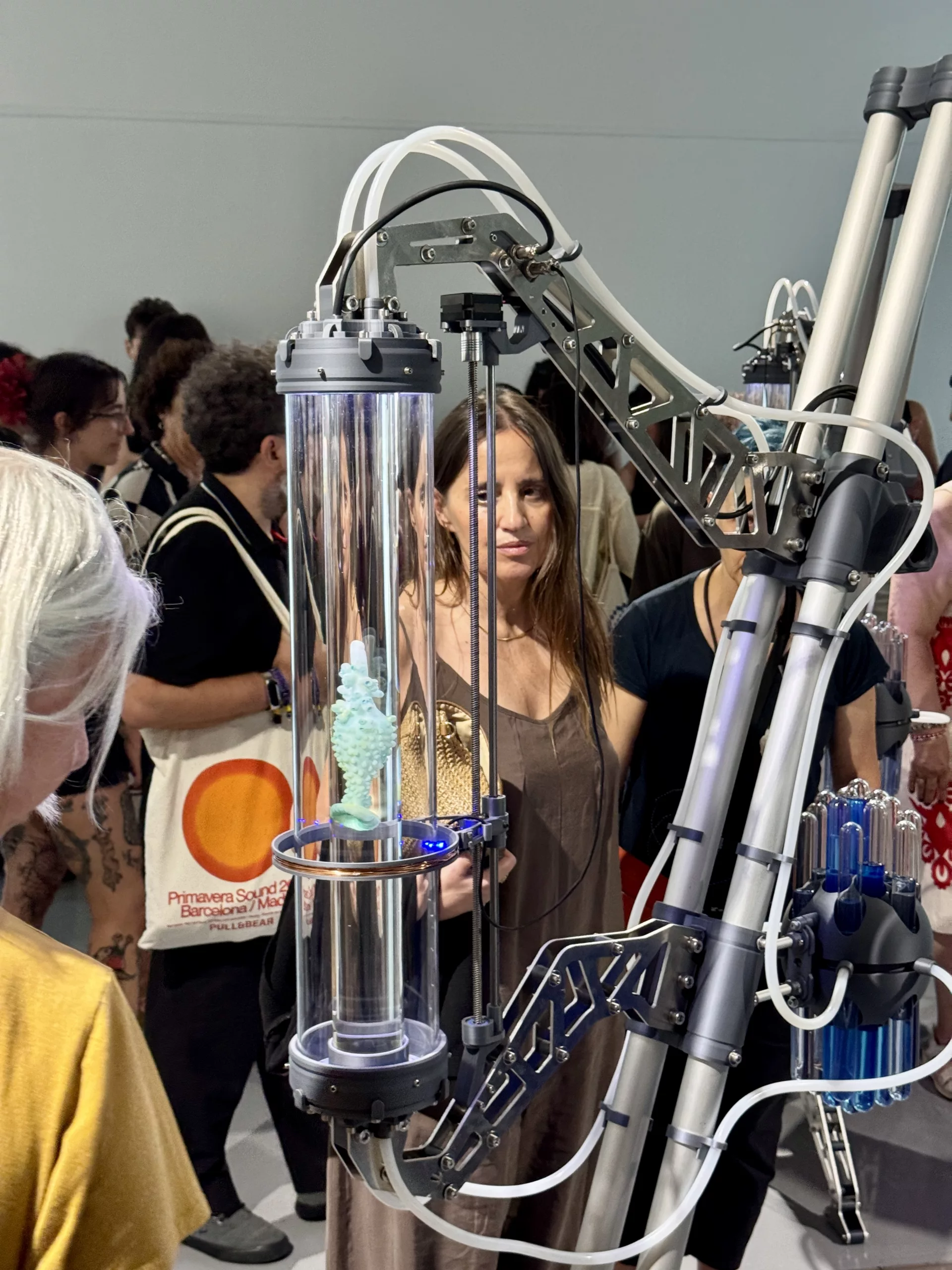
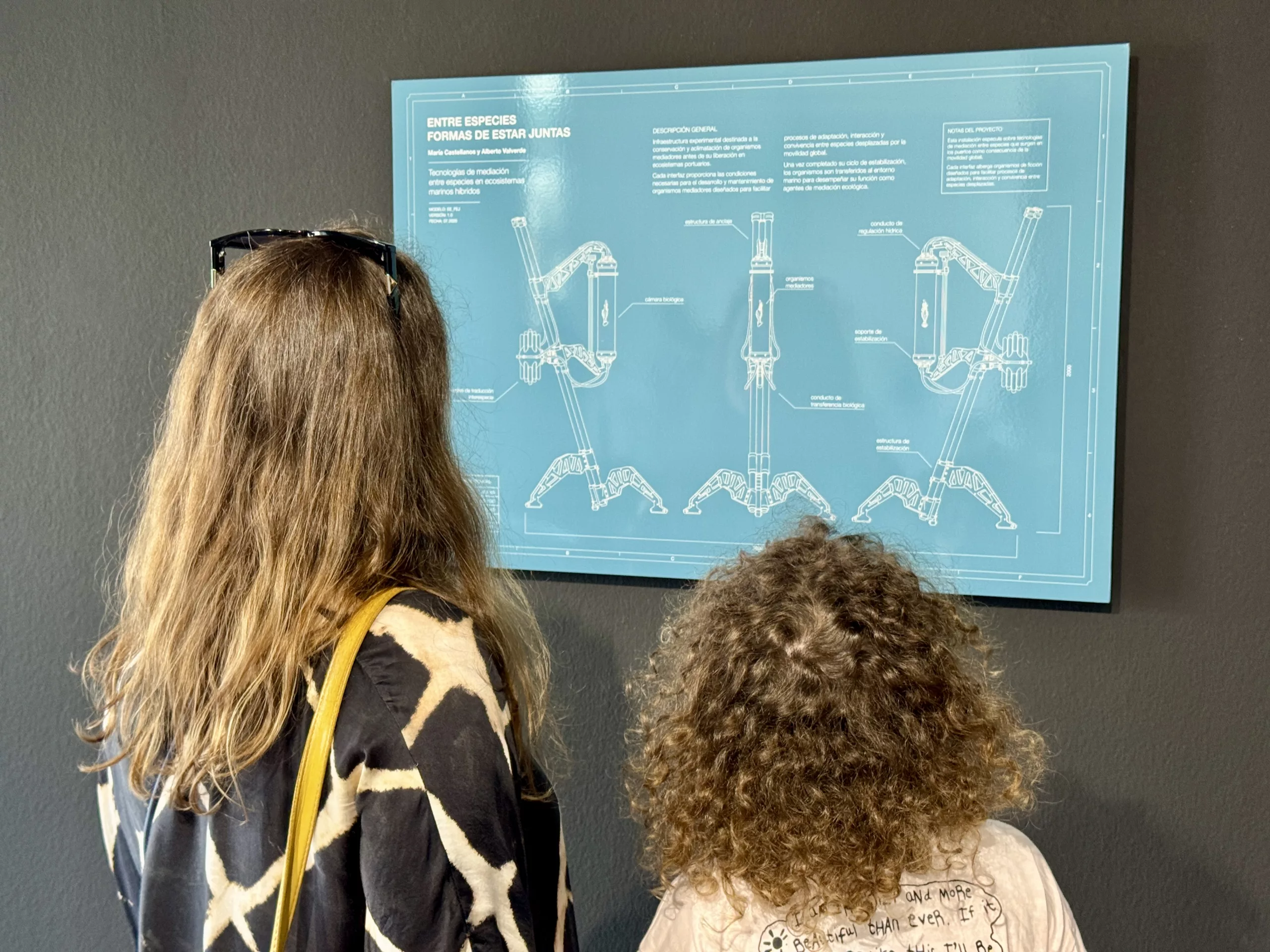
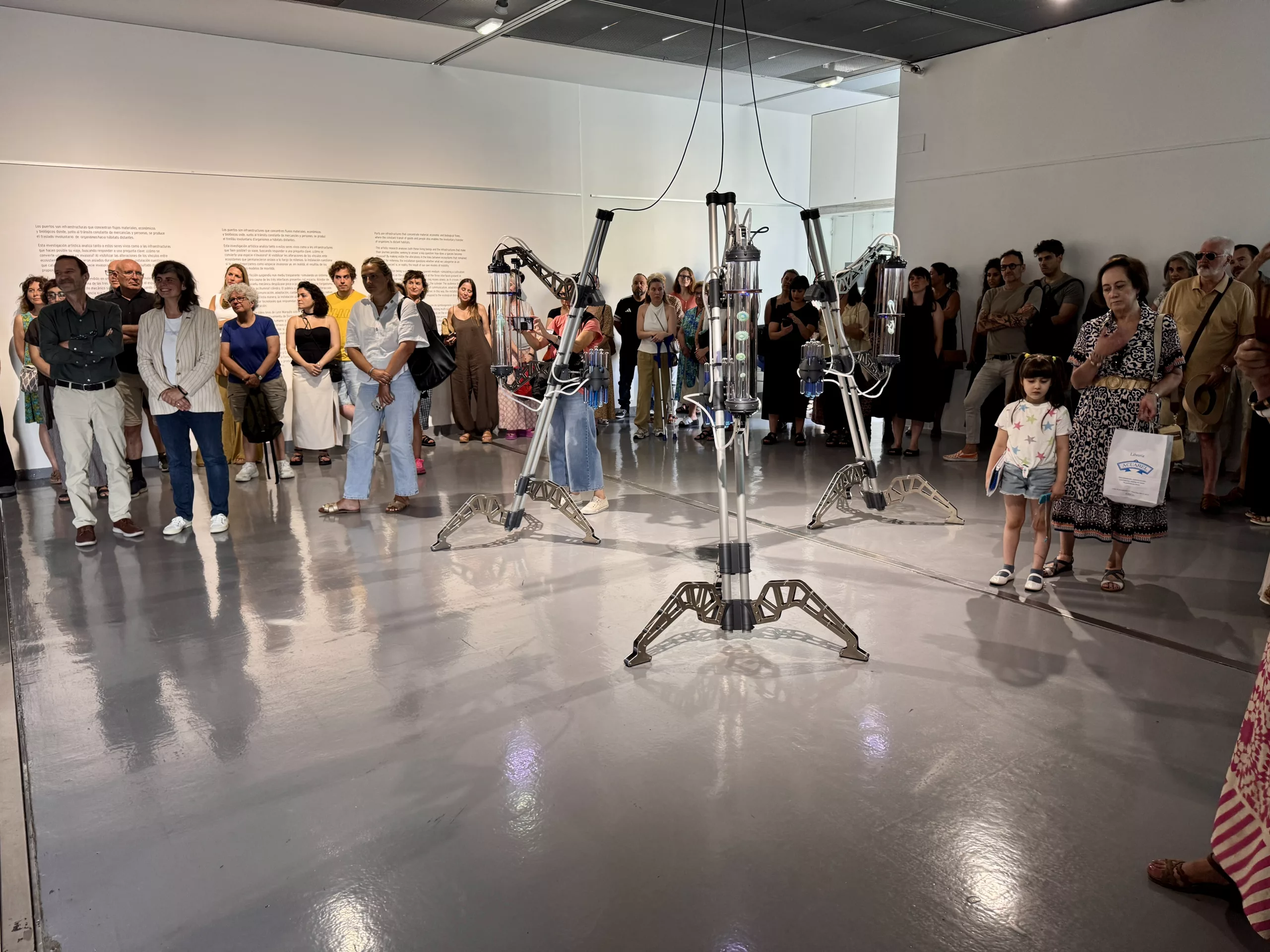
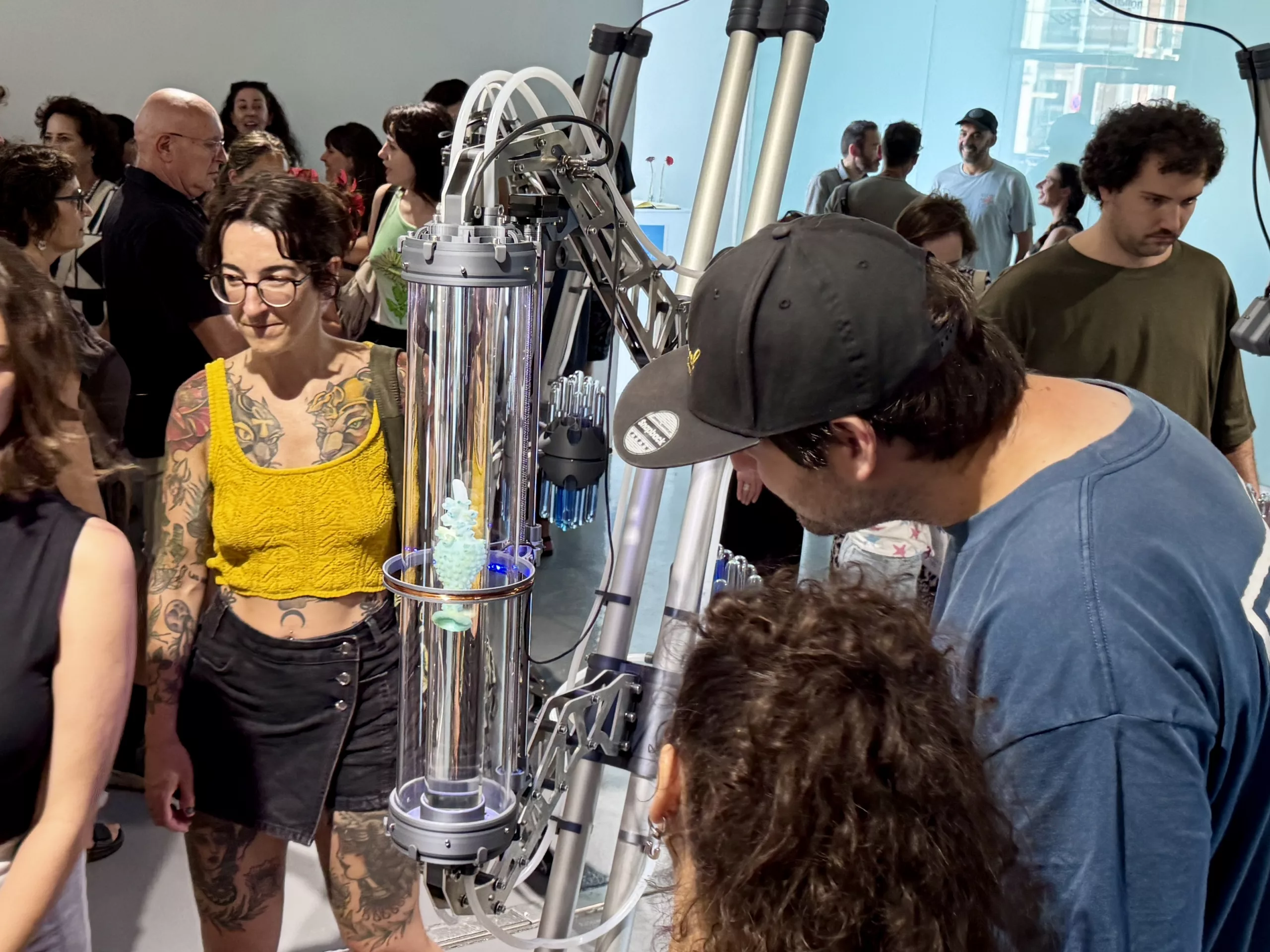
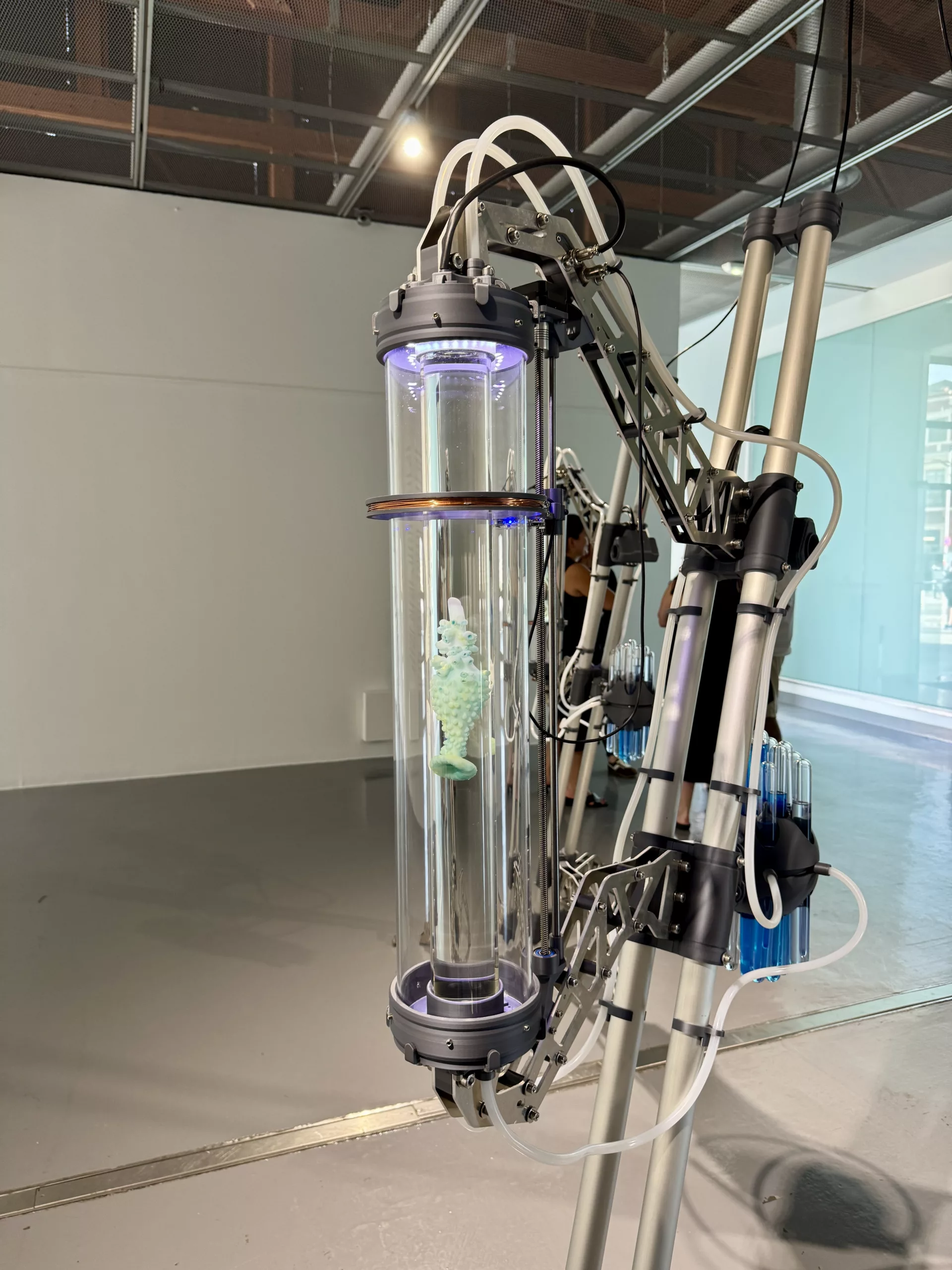
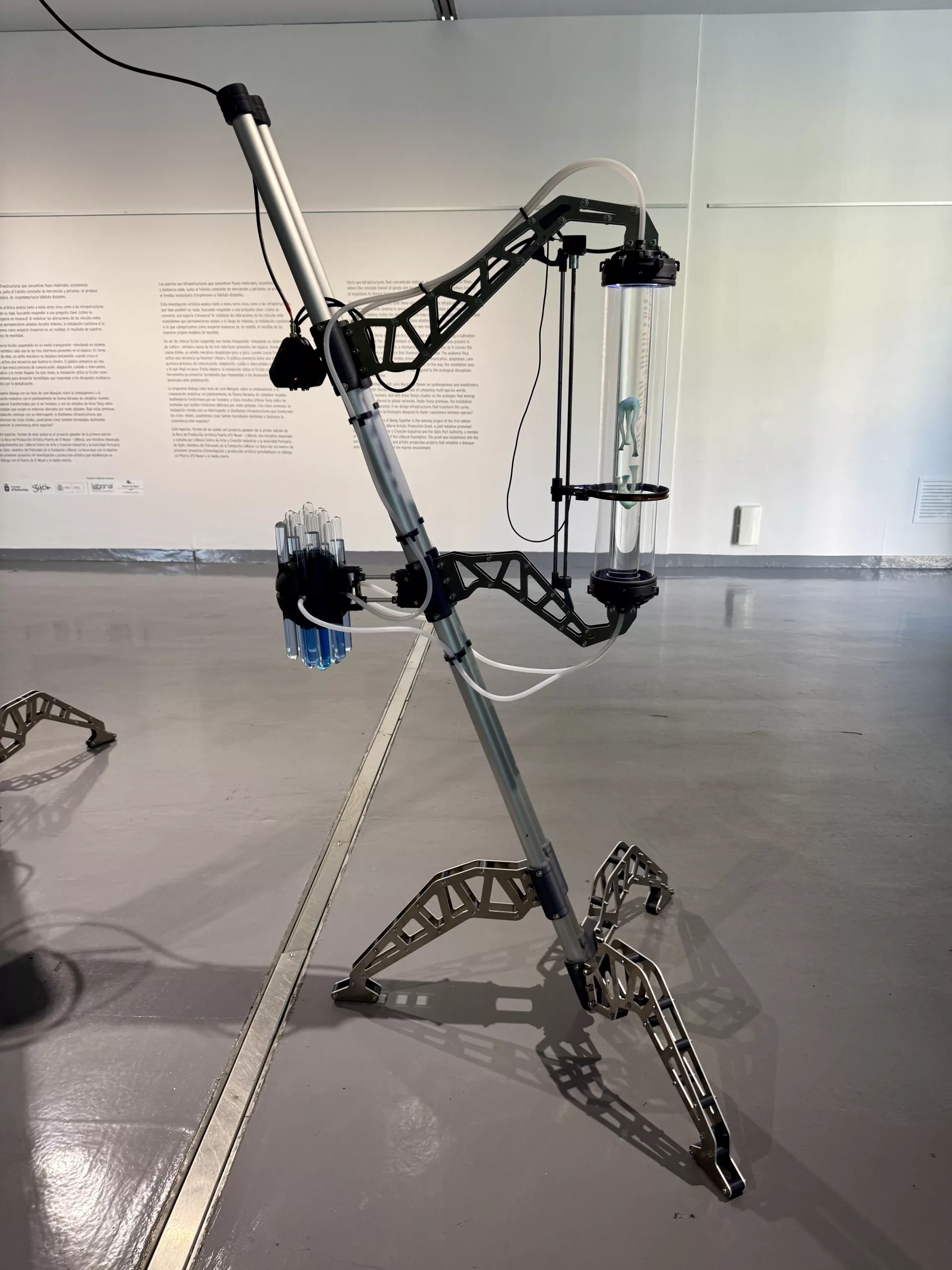
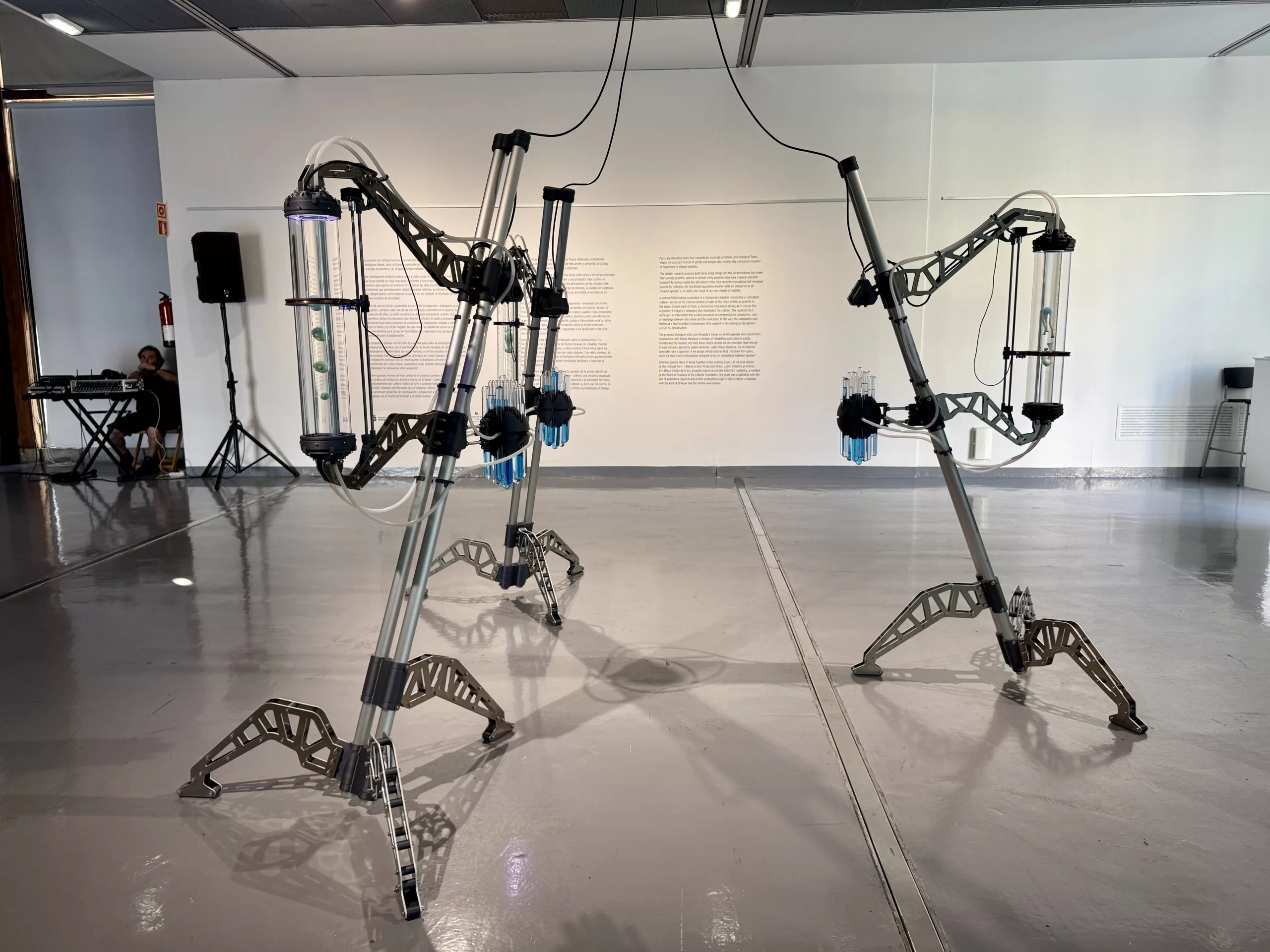
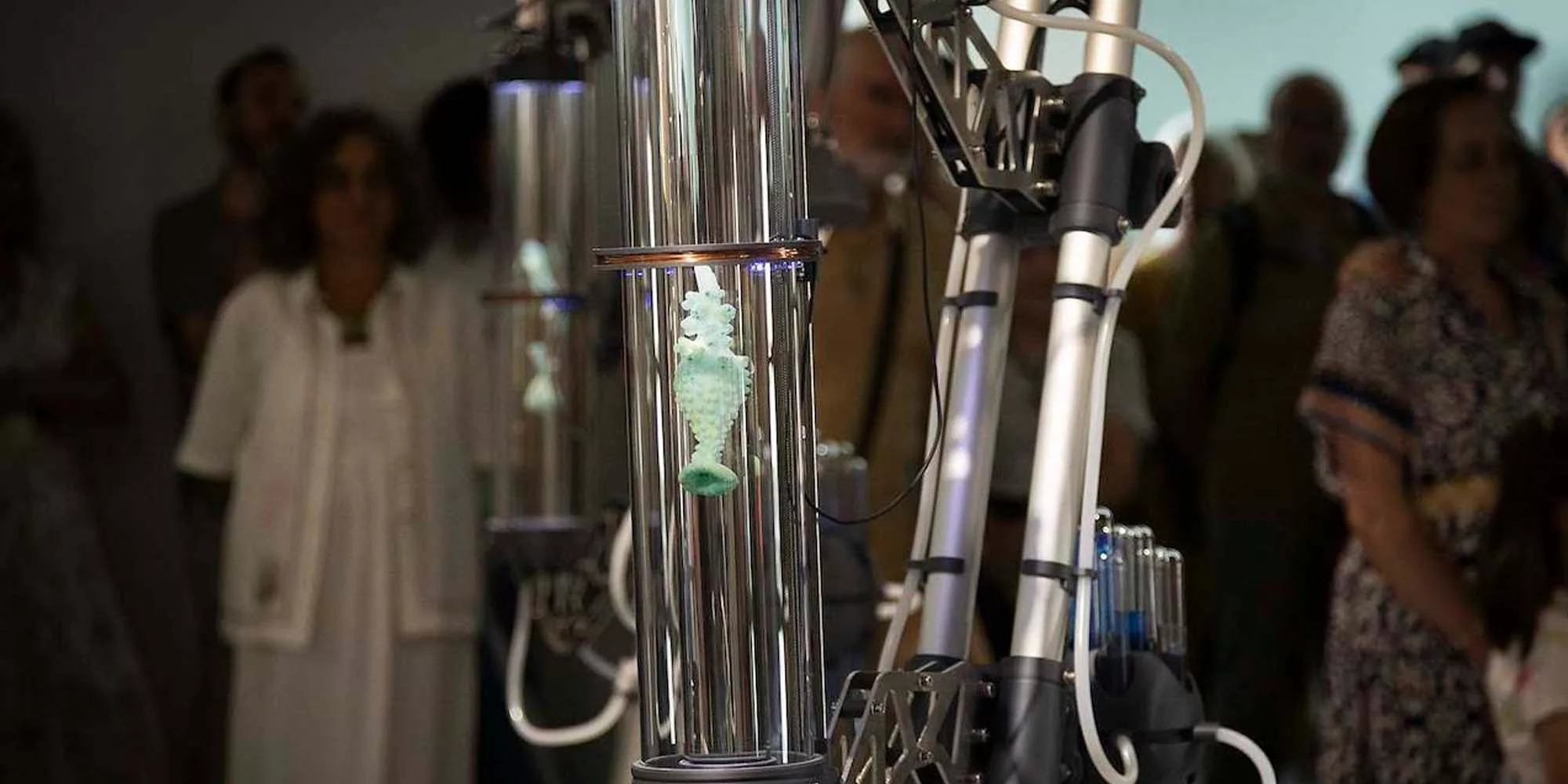
The project is organised around three interspecies interfaces. Each contains a science-fiction organism suspended in a transparent medium, simulating a culture system or life support system. A mechanical ring moves slowly along each interface. As it passes the organism, a sequence of lights activates the cylinder. The audience witnesses an interaction that might suggest a process of communication, adaptation, care or exchange between native organisms and newly arrived species. In this way, fiction helps to envision technologies that respond to the ecological imbalances caused by globalisation.
The research ties in with Lynn Margulis’s theories on symbiogenesis and evolutionary cooperation; with Donna Haraway’s approach to coexisting in multi-species worlds transformed by humans; and with Anna Tsing’s studies on the ecologies that emerge in environments altered by global networks. Based on these premises, the installation concludes with a question: if we design infrastructure that transforms life cycles, could we also create technologies designed to foster coexistence between species?