

Natalia grande
1 March 2026 – 31 July 2026
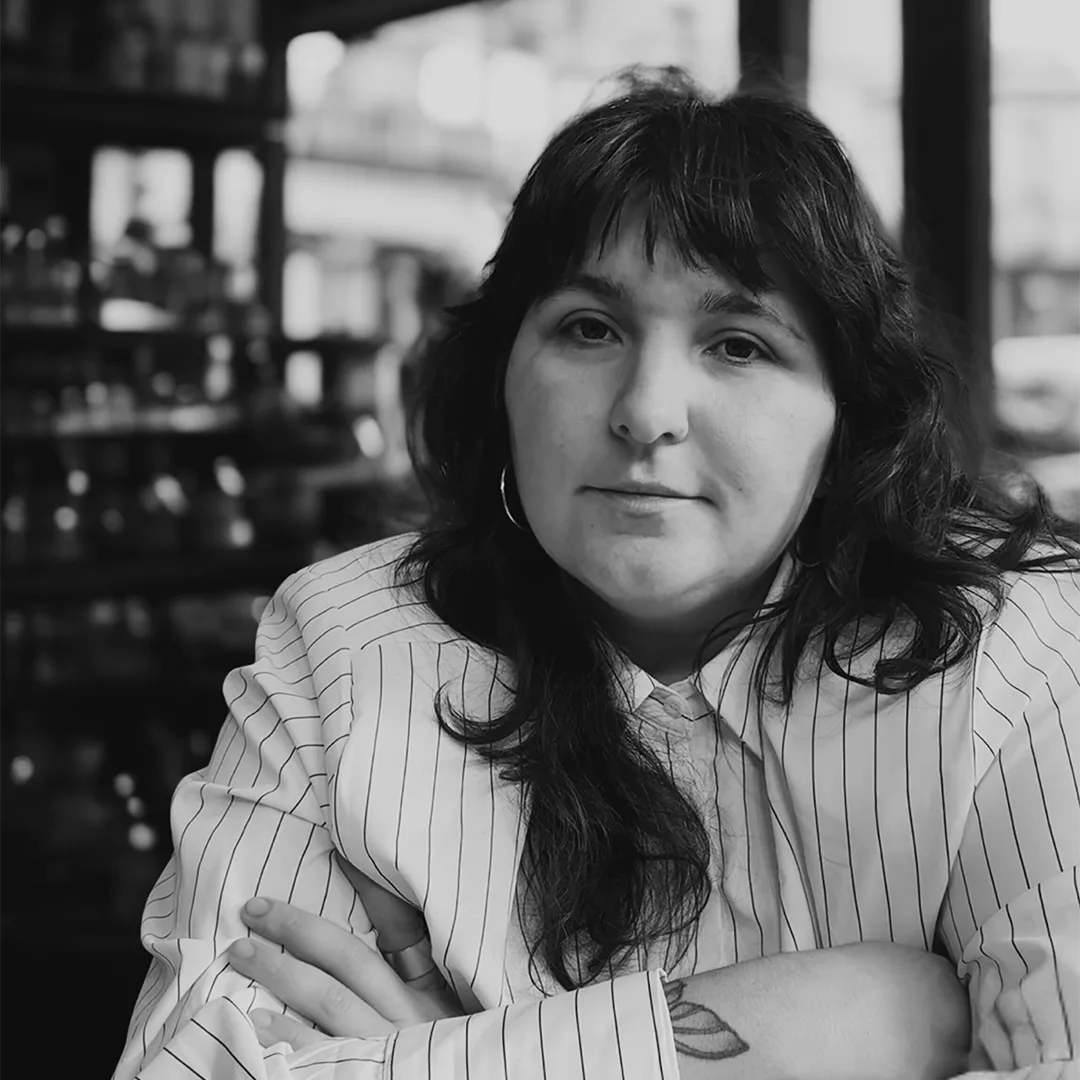
Natalia is a cinematographer and filmmaker whose practice lies at the intersection of cinema and the arts. Born in Madrid in 1989 and raised in Cusco, Peru, she trained in cinematography at ECAM with the support of the Peruvian Ministry of Culture. Her career has developed between Latin America and Europe.
She has worked on more than twenty feature films and has been director of photography on two of them, as well as on numerous short films. One of these works was recognised with the Best Film award at the Lima Alternativa Festival.
She is co-founder of AMA, an organisation dedicated to gender equality in the Peruvian audiovisual sector. She currently resides in Spain, where she continues her work in film and exhibitions and is developing her first feature film as a director, Préstame tus ojos (Lend Me Your Eyes), a project in progress that has been selected and awarded in various international development programmes.
Project in residence
Lend me your eyes
Lend Me Your Eyes is a project that revisits the photographic archive of my father, a blind and nomadic photographer, produced over four decades. A migrant archive, marked by exile and foreignness, its activation in Asturias connects the images with the displacement of his childhood after the Spanish Civil War and his exile to the United States with his father, Francisco Grande Covián, an Asturian scientist and dietitian.
The archive, produced before and after my birth, accompanied the formation of my gaze. From childhood, my father taught me to look through the camera, to be his eyes and his guide. ‘Lend Me Your Eyes’ articulates an affirmation of visual autonomy and a reopening of the archive from a queer-feminist perspective, in direct dialogue with the images I inherited.
The methodology is conceived as a reflective process, in which the archive—and the reordering of its parts—makes visible its own operations of reading, rereading, and montage. Thus, the archive is understood as an open experience, capable of creating new meanings through its revisiting, and accompanies the narrative and formal construction of the audiovisual piece.