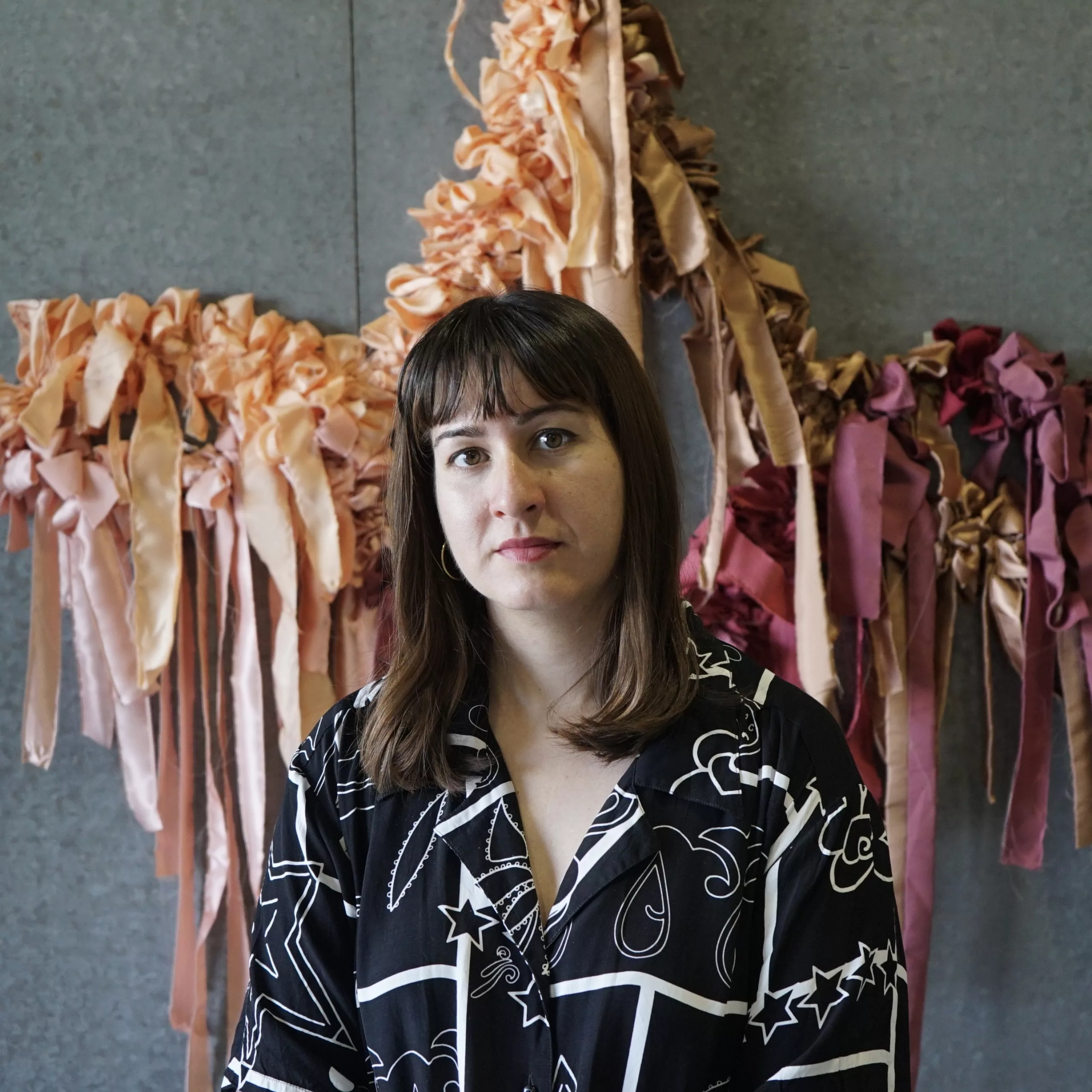
María Alcaide Romero
1 January 2026 – 30 April 2026
Maria Alcaide is a visual artist who regularly works with video, installation and text. Her research methodology is flexible and porous. She is interested in references that lie on the fringes of academia or are outside the field of art. For this reason, she always takes her personal experience and her own economic and spatial limitations as a body as her starting point.
The concept of performativity plays an essential role in her practice, as the artist draws on the high potential of performance to create fictions or reveal the fictional nature of reality. Narrative structures similar to those of stories, legends and myths are very present in her work, giving rise to stories in which she questions the social, political and economic constructs that maintain the status quo.
Alcaide has a degree in Fine Arts from the University of Seville, has studied at the Université Paris VIII and has a Master’s degree in Art and Design Research from Eina-UAB. Her research has been presented at academic institutions such as EHESS (Paris), Universität Der Künste (Berlin) and MACBA (Barcelona). Internationally, she has shown her work at the Bauhaus Archive in Berlin, the Frankfurter Kunstverein, the IMAI in Dusseldorf, Muu Kaapeli in Helsinki, the Komunuma-Fondation Fiminco gallery and the Villa Belleville in Paris, and Reed College in San Francisco. She has received awards such as Generación 2021 (La Casa Encendida) and the LaCaixa production grant, as well as Jeune Création and Salon de Montrouge in Paris. He recently won the Barcelona Producció award and has worked at the Centre Pompidou in Paris on a project about contemporary art and ruralities.
Project in residence
Sing to the gas, laugh at the earth
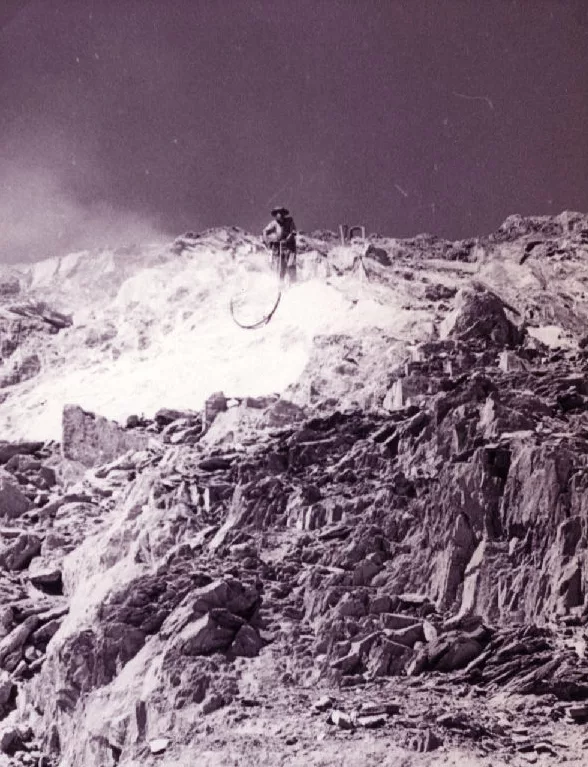
Singing to the gas, laughing at the earth is an audiovisual project that investigates the cultural legacy linked to mining work in Spain, at a time marked by ecological transition and the transformation of working-class territories. Based on previous research on manual labour, resistance and popular culture, the project proposes a close-up look at two places with strong mining memories — Asturias and Riotinto (Andalusia) — to explore how the languages and gestures linked to life in the mine are preserved, reinterpreted or transformed.
The proposal combines collective video, textile pieces made from waste materials from the mines themselves, and an installation that invites rest and critical listening. Recovering the tradition of militant cinema of the Medvedkine Groups and working in collaboration with local workers and communities, the artist seeks to activate a living archive of testimonies, choreographies of work, and strategies of everyday resistance.
The project culminates in a video installation and a free publication that documents the process, proposing new ways of thinking about workers’ memory from the periphery and from a dialogue between different souths and norths.