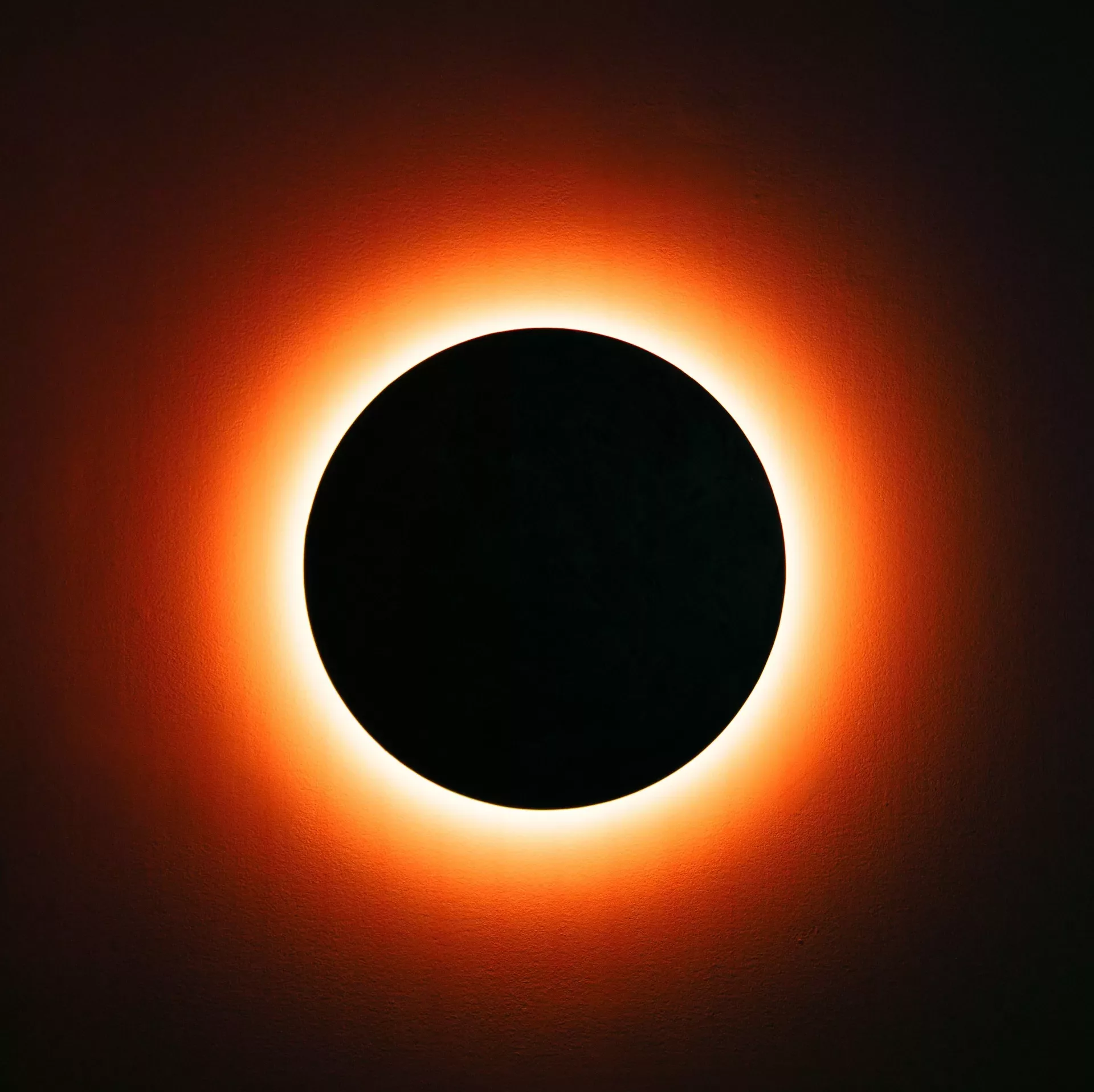
On 12 August, LABoral invites you to experience one of the most remarkable astronomical events of recent years: the solar eclipse, which will be visible from Asturias.
During the afternoon, the Centre will remain open until 9.30 pm and will serve as a meeting point for viewing the eclipse. The totality phase will occur at dusk (between 8.26 pm and 8.29 pm) and will plunge the city into darkness for 1 minute and 45 seconds.
It is essential to wear approved solar eclipse glasses that comply with regulations to avoid serious eye injuries during the partial phases. To this end, visitors will be able to collect solar eclipse glasses free of charge at LABoral, whilst stocks last, provided by the Regional Ministry of Culture, Language Policy and Sport of the Government of the Principality of Asturias.
Inclusive Eclipse
In addition, the event will feature the LightSound tool, a device developed by Harvard University in collaboration with the Inclusive Eclipse project at the Institute of Space Sciences (ICE-CSIC), which enables everyone to enjoy the eclipse in an inclusive way. This technology transforms variations in sunlight into sounds, allowing people with visual impairments to perceive how the eclipse is progressing in real time.
What are Lightsound devices?
Lightsound devices, developed by the LightSound project at Harvard University, use Arduino technology to convert light intensity into sound. Thus, during a solar eclipse, as the Moon covers the Sun, the device emits a sound whose pitch fades and becomes lower until it disappears completely during the total phase of the solar eclipse, audibly reproducing the process of the eclipse.
Lightsound devices can be connected to headphones, for an individual and rather contemplative experience, or to speakers for a shared experience. By recording light intensity, these devices enable the creation of a soundscape of the eclipse observation.
These devices have already proven their effectiveness during previous solar eclipses in the United States (2017, 2024), Chile and Argentina (2019–2020). Thanks to them, many people with visual impairments were able to perceive and enjoy this astronomical phenomenon, transforming traditional viewing into a multisensory experience.
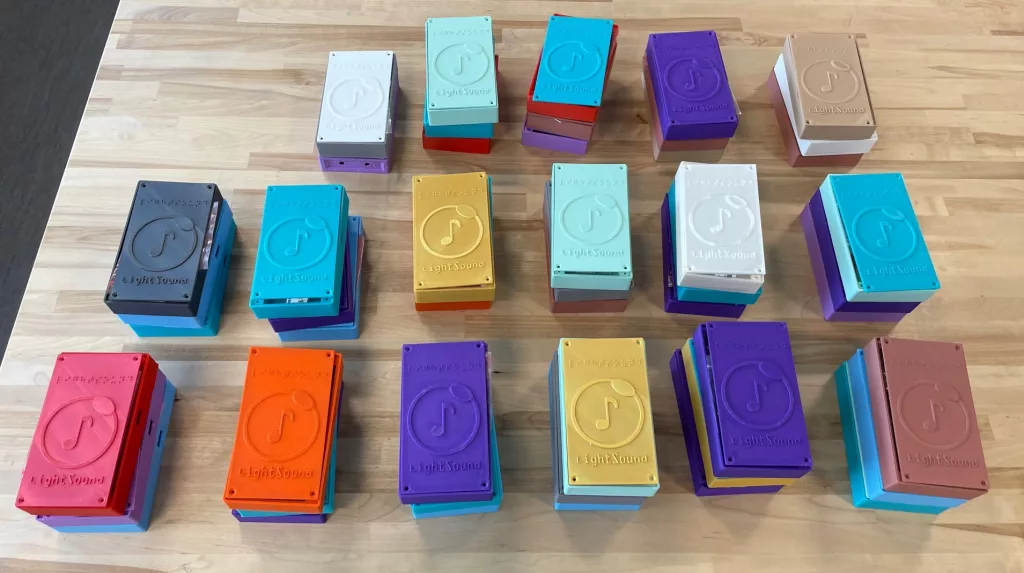
LightSound devices – Credits: LightSound
–
Free event | No prior registration required